Sally Beauty Supply
Sally Beauty, a leading supplier in the beauty industry, sought to better engage a younger audience that relies heavily on social media and influencers for beauty advice. To support this goal, we developed a detailed persona and journey map that helped identify key motivations and pain points. These tools were then used to build a strategic backlog of website personalization initiatives aimed at improving user engagement and relevance.
Additionally, we analyzed user behavior data to better understand the company’s high cart abandonment rate. By surfacing patterns and insights that had not been previously considered, we uncovered new opportunities for optimization. These findings directly informed the addition of new, data-driven projects to the product roadmap.
UX skills demonstrated:
Persona development and user segmentation
Customer journey mapping
Strategic backlog creation
Behavioral data analysis
Problem identification through UX metrics
Cross-functional collaboration (e.g., product and analytics teams)
E-commerce optimization strategies (e.g., cart abandonment)
Experience personalization planning

Select to view PDF.
Ashley Furniture
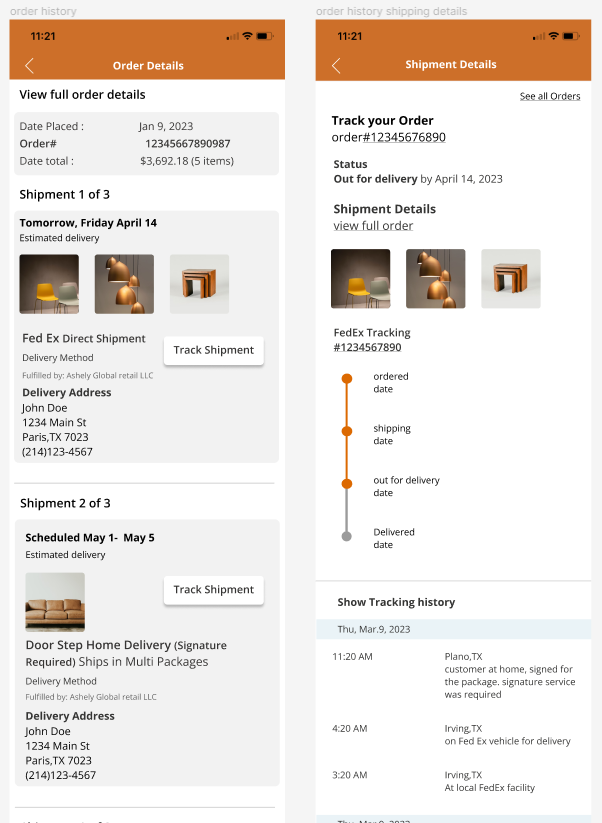
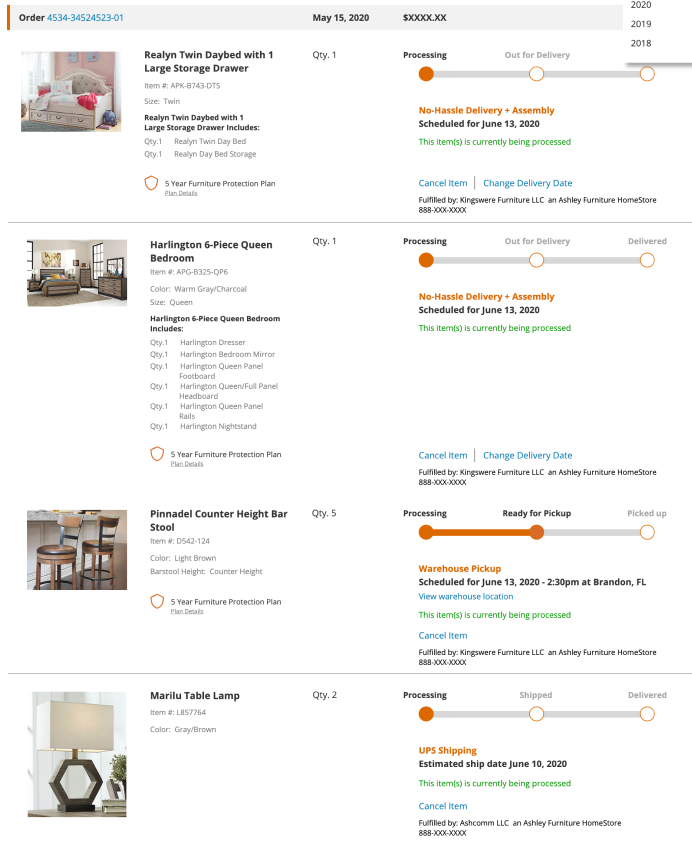
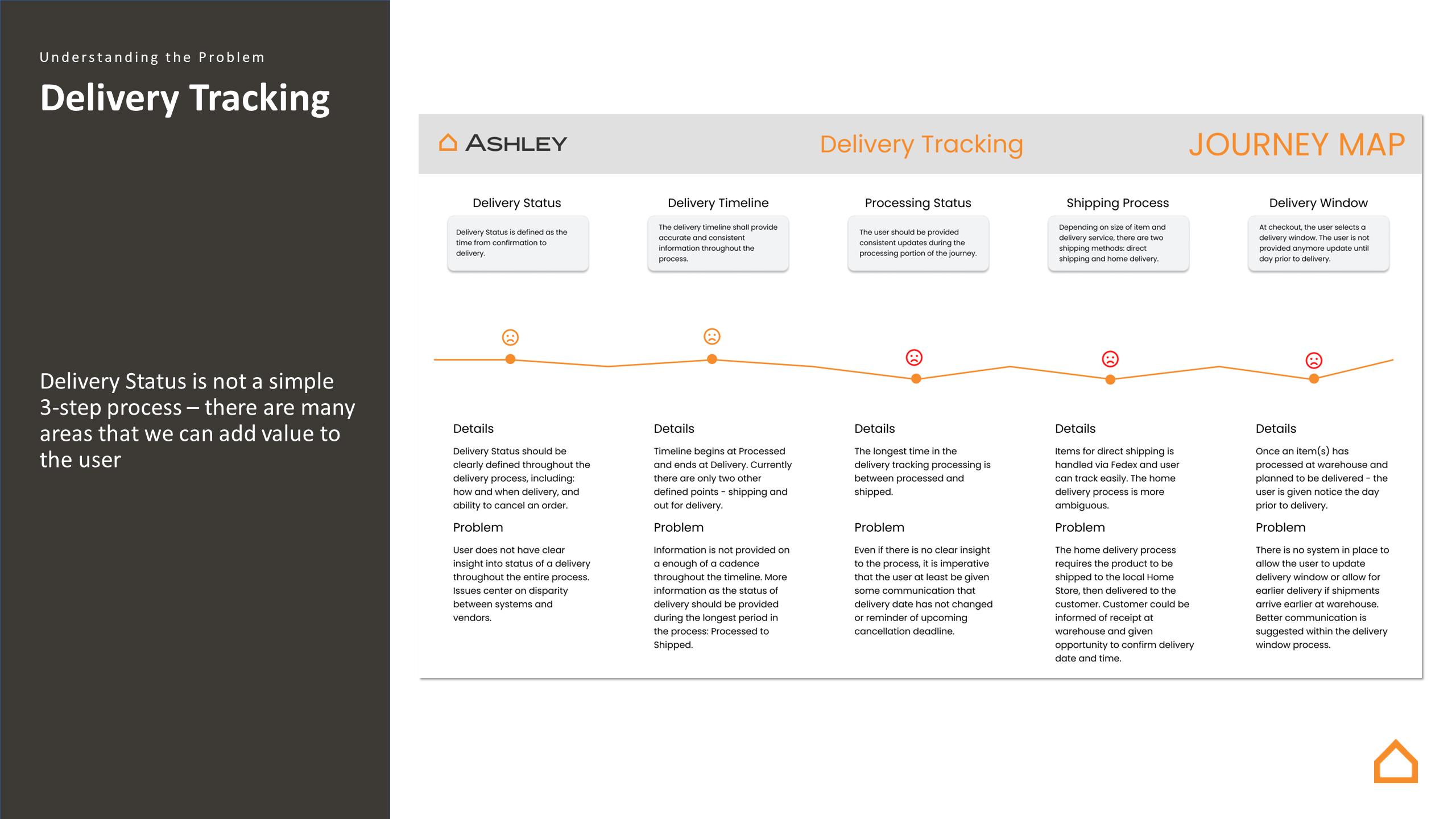
Ashley Furniture was experiencing a high volume of Customer Care calls—numbering in the hundreds of thousands annually—which placed a significant strain on internal resources. Research revealed that approximately 70% of these calls were related to order information, including order history, tracking, and status. Over a three-month period, we conducted multiple research and design initiatives to address these issues. This included benchmarking the current experience, conducting a competitor analysis, outlining industry best practices, establishing redesign guidelines, and creating updated user interfaces. Below is an example of the redesigned order status screens for both desktop and mobile platforms.
UX skills demonstrated:
Problem framing and stakeholder alignment
Benchmarking and usability evaluation
Competitive analysis
Industry best practice research
Mobile and desktop UI/UX design
Information architecture for self-service features
Design system integration
Reducing support volume through UX improvements
Cross-platform consistency and responsive design

Select to view larger image.