Persona Creation.
Creating personas is a core UX skill that helps bring user research to life by humanizing data and transforming it into actionable design guidance. Personas are fictional but data-driven representations of key user groups, developed through qualitative and quantitative research such as interviews, surveys, usage analytics, and field observations. They typically include details such as goals, behaviors, pain points, motivations, and key tasks. When thoughtfully constructed, personas become a reference point that keeps user needs at the center of every design decision.
The Value of Personas
The value of personas lies in their ability to focus cross-functional teams—designers, developers, product managers, and stakeholders—on real user needs rather than assumptions or internal biases. Personas foster empathy and create alignment across teams by providing a shared understanding of who the users are and what they care about. They also help prioritize features and functionalities by framing decisions through the lens of the user’s goals and constraints. This is particularly helpful when navigating trade-offs, aligning on scope, or advocating for user-centered outcomes in business-driven environments.
Driving UX Research and Design
Personas act as both the output of early-stage research and a compass for ongoing research and design. During ideation and design phases, personas guide brainstorming sessions, journey mapping, task analysis, and usability testing. They help teams envision how different users might experience the product and what design solutions would best support them. Additionally, personas inform test plans by helping researchers select appropriate participant profiles and craft realistic user scenarios. Over time, as new research emerges, personas can evolve to reflect changing user needs, ensuring the design process remains adaptive and grounded in evidence.
Sleep Number – Persona Development to Enhance the Sales Experience
As part of a broader initiative to modernize and improve the in-store sales process for Sleep Number, our team developed a set of targeted customer personas to help sales professionals better understand and engage with the diverse needs of their shoppers. The goal was to move beyond a one-size-fits-all approach and equip sales teams with the tools to create more personalized, empathetic, and effective customer interactions.
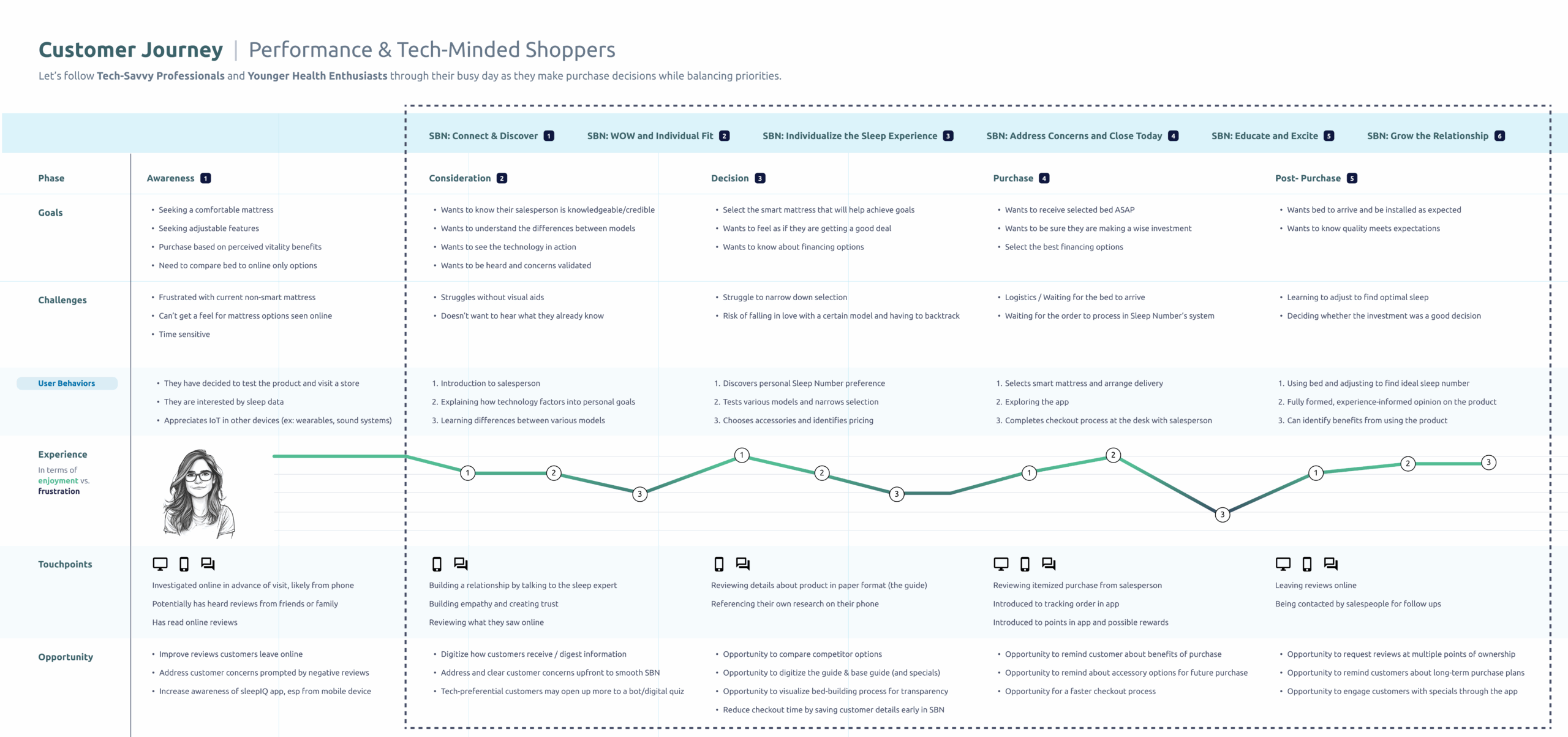
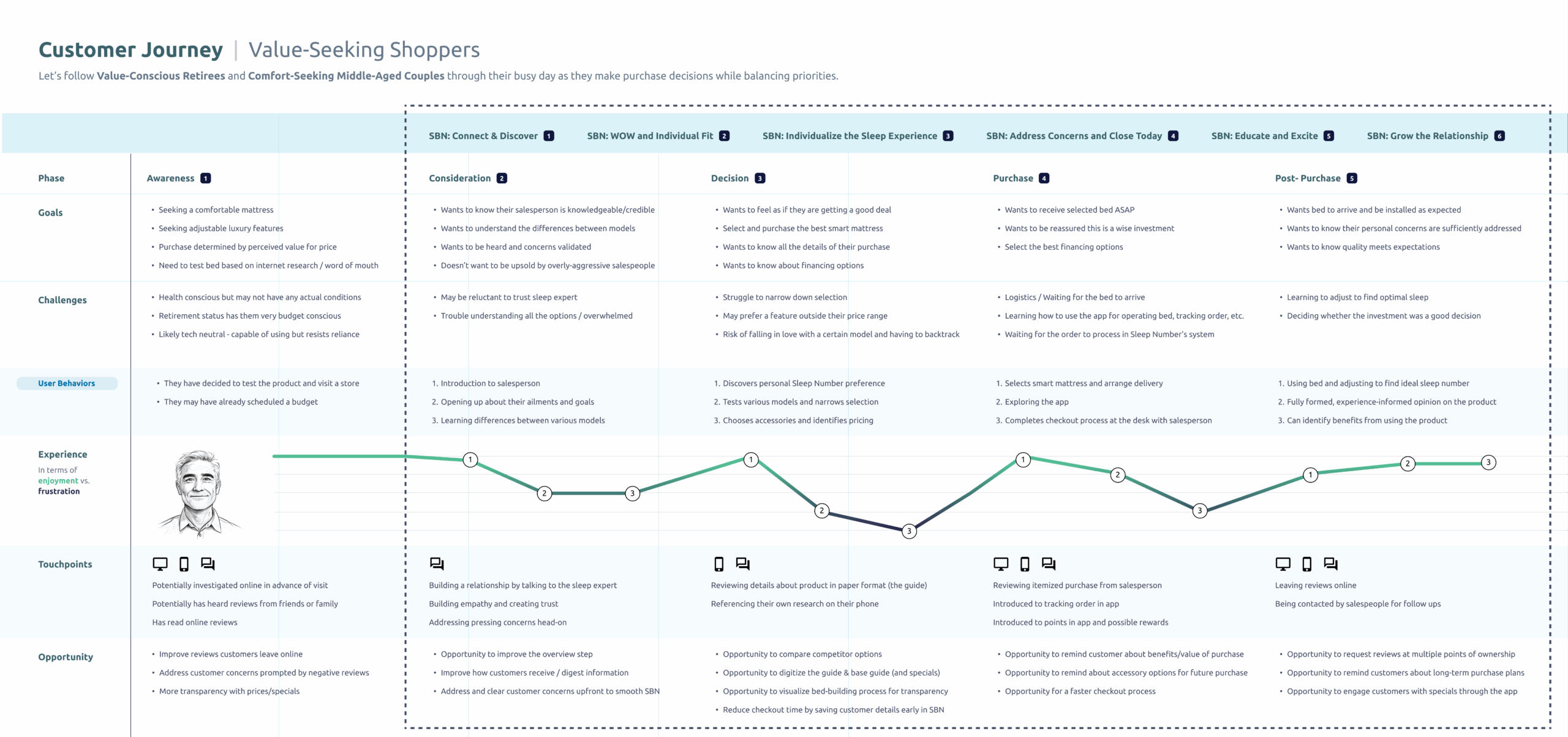
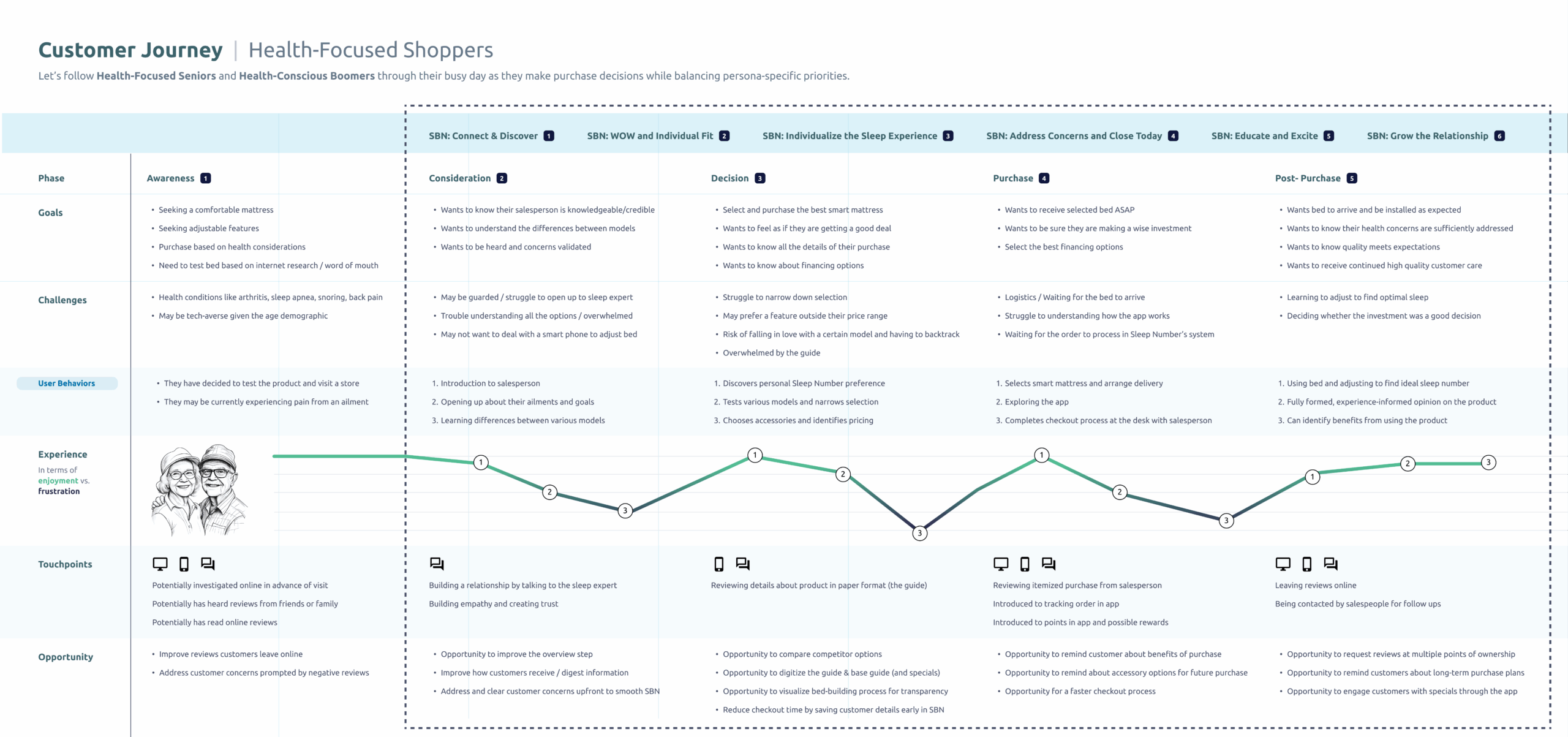
Through interviews with Sleep Number’s “Sleep Experts” and analysis of sales data and customer feedback, we identified patterns in buyer behavior, motivations, and objections. These insights led to the creation of multiple personas, each representing a key customer type—ranging from health-conscious sleepers looking for long-term wellness solutions, to budget-focused shoppers primarily interested in promotions, to couples navigating differing sleep preferences.
By embedding these personas into the sales process training and documentation, we enabled Sleep Experts to tailor their approach in real time, framing product benefits in language that resonates with each customer type. This shift not only supported a more human-centered selling approach, but also helped align sales techniques with actual customer priorities—improving trust, reducing friction, and ultimately driving conversions.
UX skills demonstrated: persona development, stakeholder interviews, qualitative analysis, customer journey mapping, sales enablement strategy, and service design integration.
Select to see larger image.