01 | Stakeholder Conversations
We began the engagement with a series of stakeholder conversations to build a clear understanding of the current sales process and the context surrounding it. The client walked us through how the process was intended to work, highlighting known pain points gathered from Sleep Professionals on the floor. We also partnered with marketing to review performance data, gaining insight into sales trends and areas where the experience may be falling short. Together, these conversations helped establish an initial baseline—combining frontline feedback with business metrics—to identify where deeper exploration and improvement opportunities might exist.
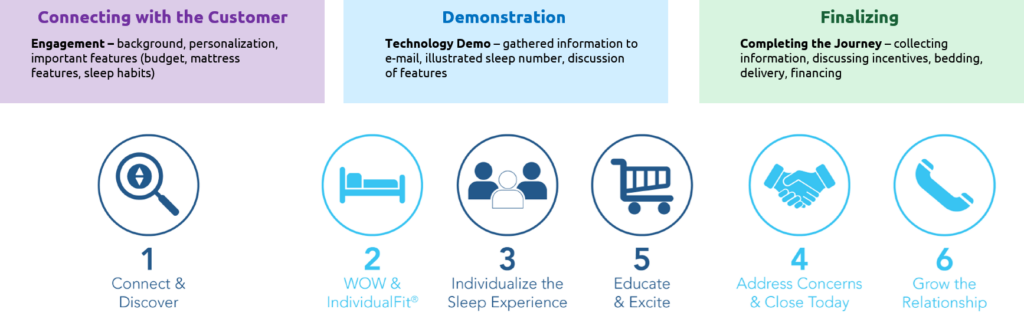
Basic outline of the current sales process.
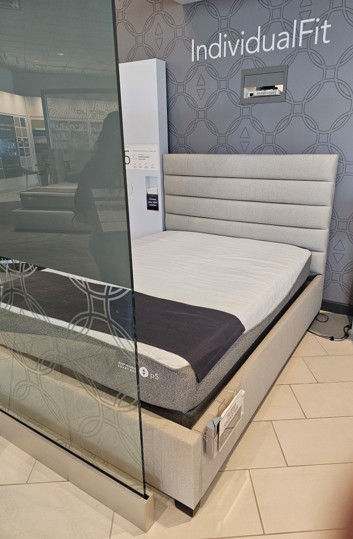
Bed used to demonstrate technology.
02 | Interviews with Sleep Professionals
We conducted in-depth interviews with Sleep Professionals across roles—from floor sales associates to store managers—to understand how the sales process played out in practice. While the process, as taught by Sleep Number, placed strong emphasis on the product as the primary driver of the sale, these conversations revealed a gap between intention and reality. Although the product itself is compelling, what was often missing was a deeper understanding of the customer and the development of a meaningful connection between the customer and the Sleep Professional. Several consistent themes emerged:
- Product-first vs. customer-first approach – The process relied heavily on the product to “sell itself,” with less emphasis on understanding individual customer needs, preferences, and decision drivers.
- Limited relationship-building – Opportunities to build trust and personalize the experience were often underutilized, impacting engagement and confidence in the purchase.
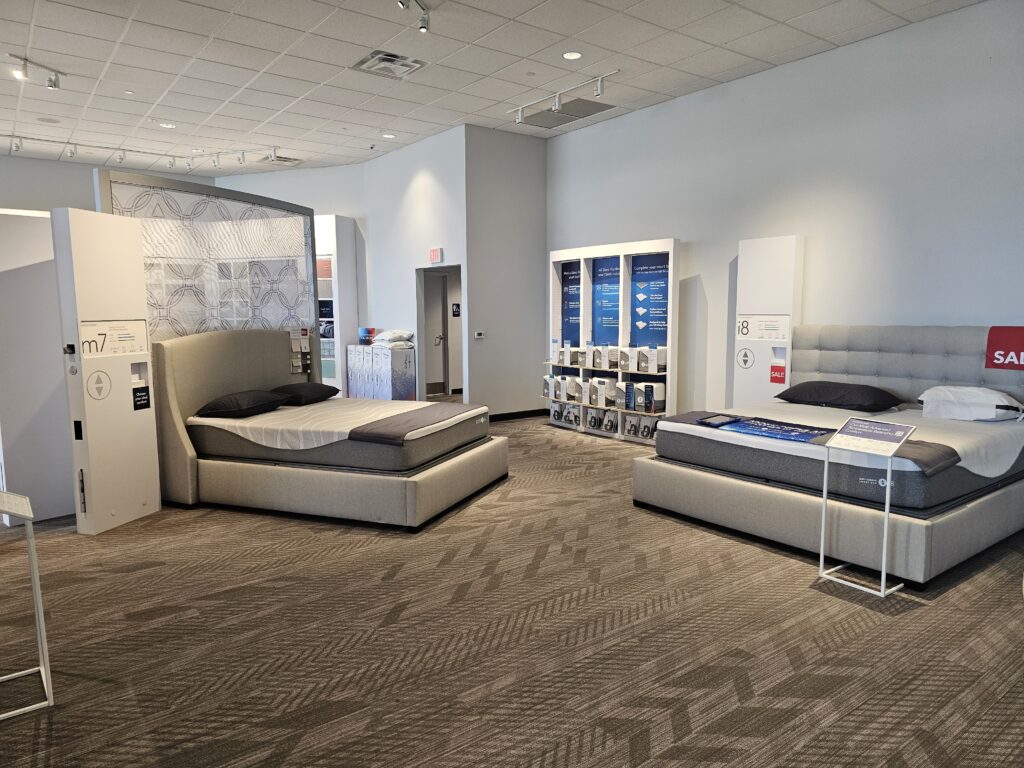
- Store layout challenges – Physical store configurations did not consistently support a natural, intuitive customer journey or aid in decision-making.
- Confusing pricing communication – Pricing structures and options were difficult to clearly explain, creating friction during key decision moments.
- Technology gaps in the sales process – Existing tools did not effectively support Sleep Professionals in guiding customers through the purchase, limiting their ability to reinforce value and clarity.
These insights highlighted that improving sales performance was less about the product itself and more about how the overall experience supported customer understanding, confidence, and decision-making.
03 | In-store Experience
To better understand how the sales process translated into real-world interactions, we conducted in-store visits across multiple locations, including Tennessee and Florida. During these visits, we observed live customer engagements and conducted additional interviews with Sleep Professionals to see how the process was executed on the floor. This allowed us to move beyond stated processes and uncover how customers actually experienced the journey—from initial engagement through final purchase decisions. Several key opportunities emerged:
- Enhance Personalization in Customer Engagement
Move beyond scripted interactions toward more discovery-driven conversations. Encourage Sleep Professionals to explore customer sleep habits, preferences, and budget, while also incorporating prior online research to better meet customers where they are in their journey. - Improve Connection Between Demo & Product Selection
Strengthen the link between the comfort number demonstration and specific product recommendations. Ensure customers clearly understand why a particular mattress fits their needs, allowing the demo to transition naturally into a personalized product discussion. - Expand Discussion on Additional Offerings
Introduce complementary products—such as adjustable bases, bedding, and accessories—in a way that reinforces overall sleep benefits. Provide clearer guidance around financing and affordability to support more confident decision-making. - Create a More Seamless End-to-End Experience
Refine the full sales journey to feel more cohesive and supportive. Ensure smoother transitions from demonstration to product selection, financing, and final recommendations, while reinforcing and validating the customer’s needs at the end of the experience.
04 | Design Implications & Recommendations
Synthesizing insights from stakeholder conversations, Sleep Professional interviews, and in-store observations, we identified a clear opportunity to shift the sales experience from a product-driven model to a more human-centered, customer-focused approach. While the existing process emphasized product features and demonstrations, our findings showed that improving sales performance required better alignment with how customers make decisions—grounded in their needs, preferences, and confidence throughout the journey.
To support this shift, we developed a set of actionable design and experience recommendations:
- Reframed the Sales Experience Around the Customer
Transitioned from a scripted, product-first approach to a more personalized, discovery-driven interaction model that emphasizes understanding the customer before introducing solutions. - Developed Customer Personas & Journey Maps
Created personas based on observed behaviors and interview insights, along with end-to-end journey maps that highlighted key moments of friction, decision points, and opportunities for improved engagement. - Strengthened the Connection Between Experience & Product
Redesigned how the comfort number demonstration connects to product recommendations, ensuring a clearer, more intuitive progression from exploration to decision-making. - Incorporated Research on Effective Sales Strategies
Leveraged best practices in consultative selling and customer engagement to guide recommendations, ensuring the experience supports trust-building, clarity, and confidence. - Improved Clarity Around Pricing & Offerings
Simplified how pricing, financing, and additional products are introduced and explained, reducing confusion and supporting more informed purchasing decisions. - Delivered an Updated, End-to-End Sales Experience
Provided a reimagined version of the sales process that integrates personalization, clearer transitions between steps, and a more cohesive journey from initial interaction through final purchase.
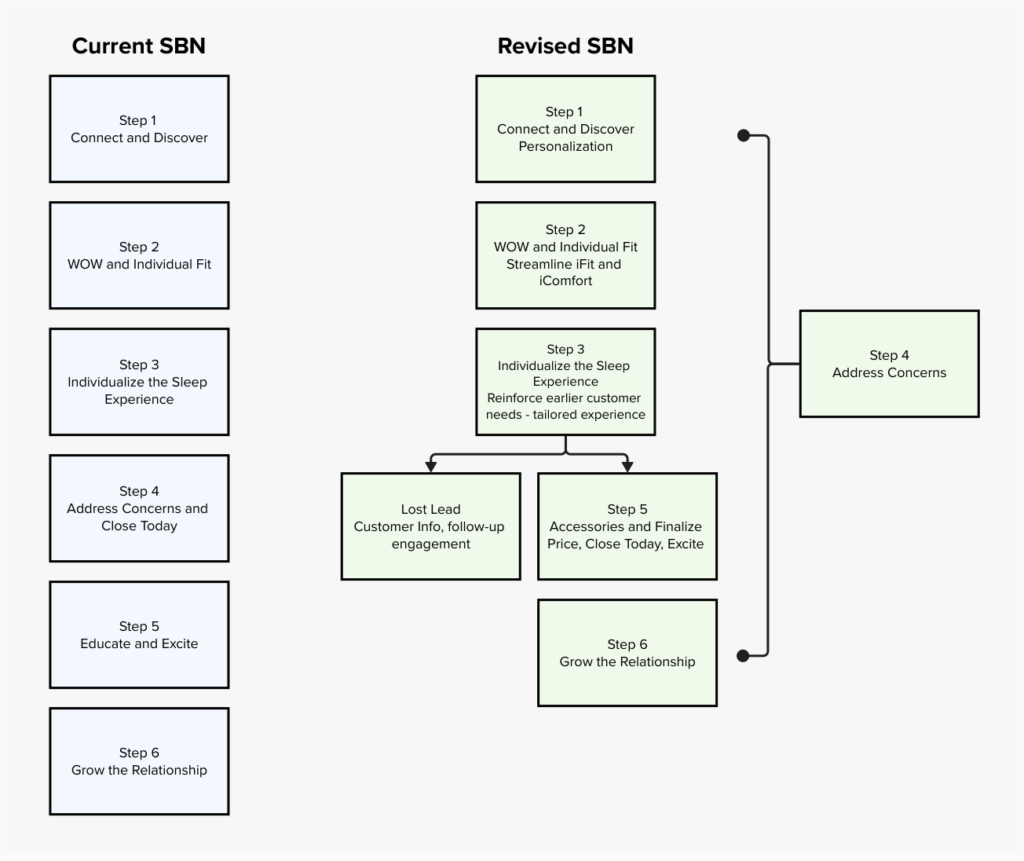
Reimagined Sale Process.