User Interviews.
User interviews are one of the most valuable tools in the UX research process, offering direct access to how real users think, feel, and behave. Through open-ended conversations, we can uncover deep insights into user motivations, goals, pain points, and mental models—information that’s often missed through quantitative methods alone. Interviews are especially useful in the early discovery phase, helping to define the problem space, shape personas, and inform the direction of design strategies. They allow us to move beyond assumptions and hear the context behind user decisions, behaviors, and frustrations.
Beyond discovery, user interviews play a critical role throughout the design lifecycle. They can be used to validate concepts, test usability, and gather feedback on prototypes. Interviews help ensure we’re building solutions that truly resonate with users and solve meaningful problems. When paired with other methods—such as surveys, usability tests, or workshops—they provide a well-rounded, human-centered foundation for decision-making. Ultimately, user interviews are not just about collecting data—they’re about creating empathy and building experiences that are both intuitive and impactful.
Sleep Number - Sales Persons Interviews
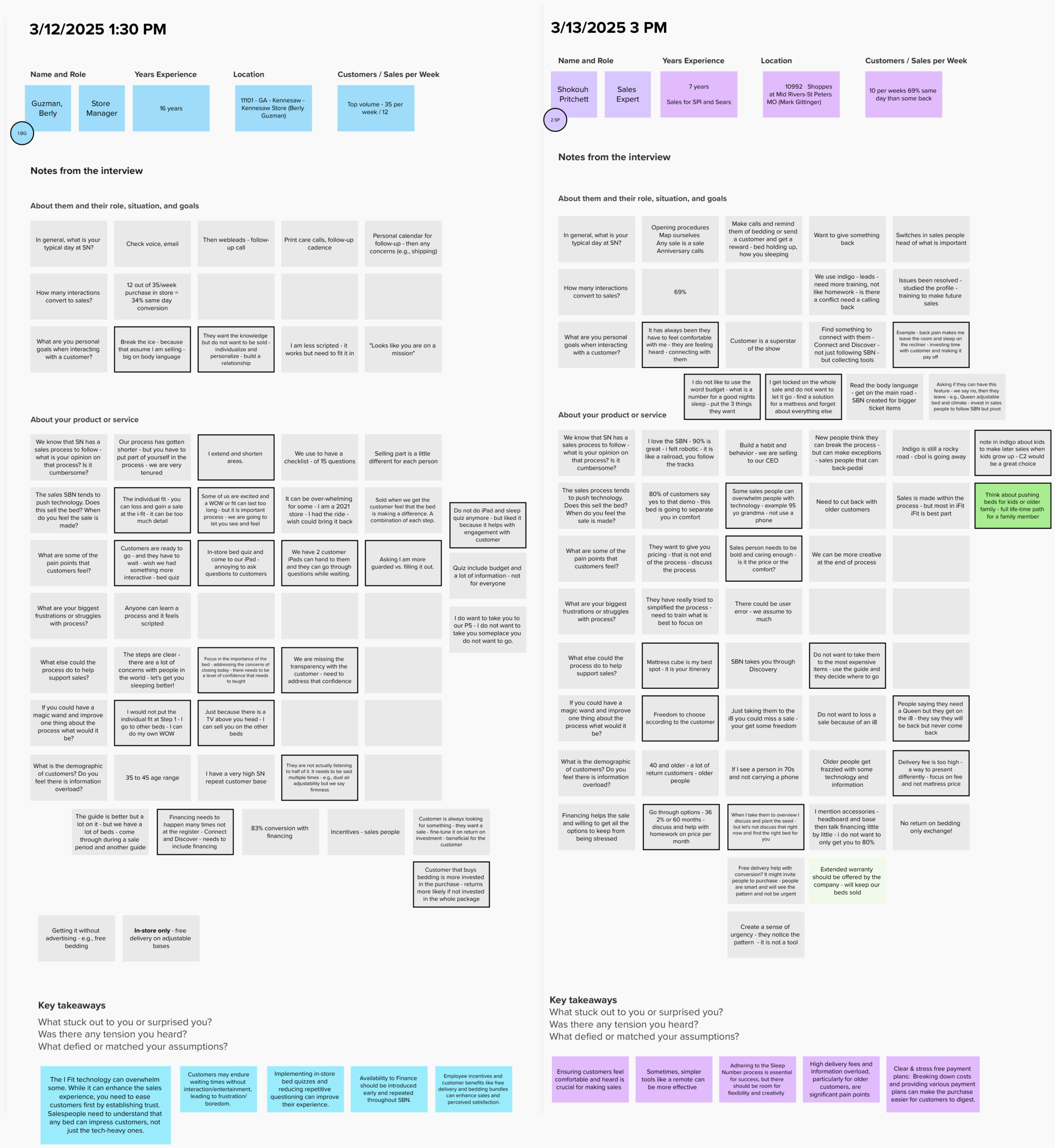
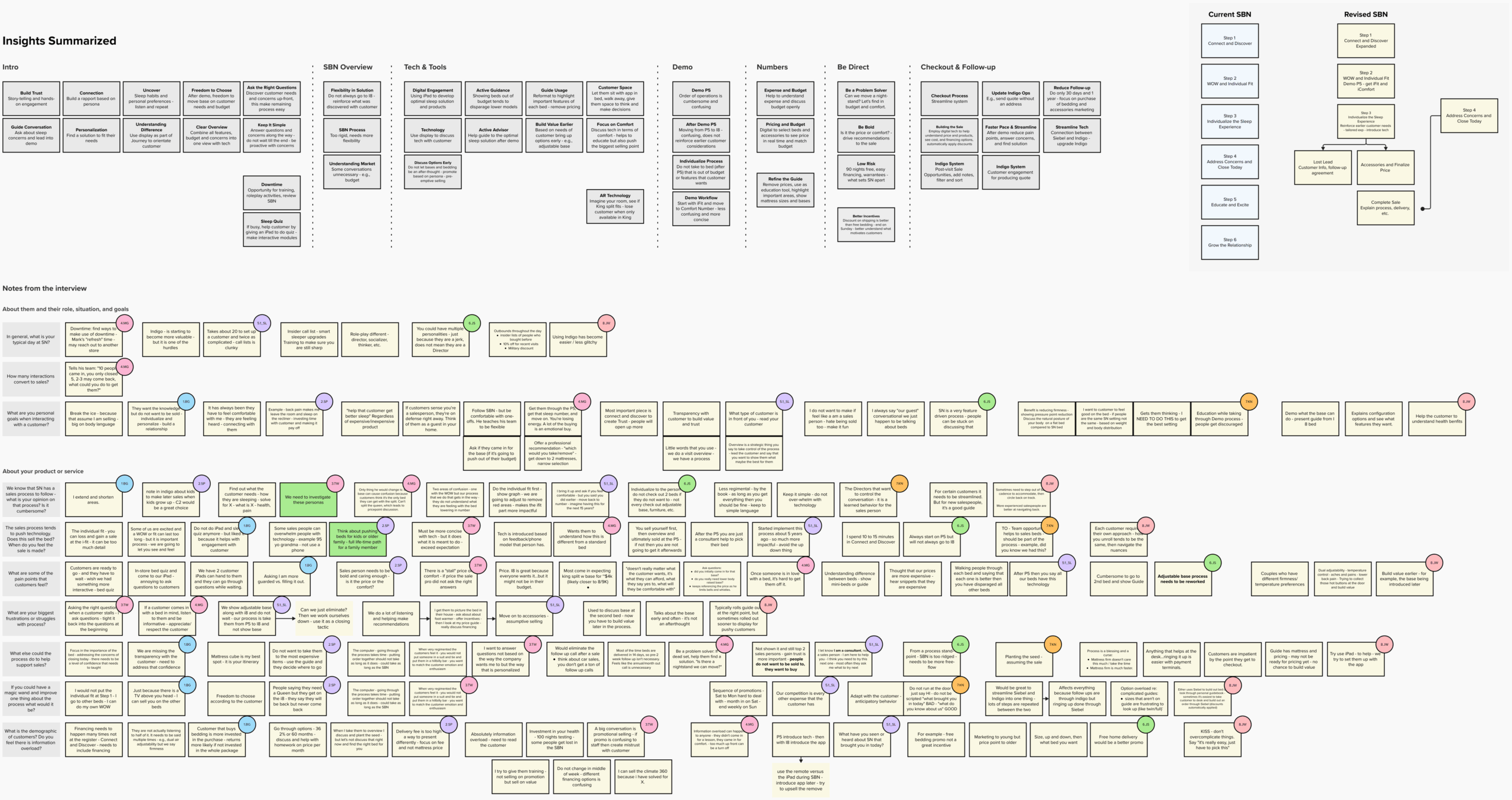
As part of our UX research for Sleep Number, we conducted in-depth user interviews with Sleep Experts to closely examine the current sales process. These frontline employees provided valuable firsthand insight into how the process plays out in real customer interactions. Our interviews focused on understanding how the predefined steps—created by the Sales Executive team—were being interpreted, adapted, or skipped in practice. We explored areas such as customer engagement, needs assessment, product presentation, and how objections and concerns were handled throughout the journey.
By grounding our research in the lived experience of Sleep Experts, we were able to identify where the sales steps aligned well with real-world needs—and where friction or gaps emerged. These insights helped us evaluate not just the structure of the sales process, but also its usability and effectiveness from the perspective of those responsible for executing it. The findings informed actionable recommendations to improve alignment between corporate strategy and on-the-floor realities, ensuring that future iterations of the process are both customer-centric and operationally feasible.
Select to view larger image.