Aerospace Projects.
For eight years, I worked at NASA’s Johnson Space Center in Houston as part of Lockheed Martin’s Space Life Sciences team, specializing in usability research and human factors. Working in the Usability Testing and Analysis Facility, I contributed to the design, testing, and validation of systems used by astronauts aboard the International Space Station (ISS) and in future missions including Orion and Lunar Habitation. My work spanned critical areas such as EVA procedures, in-flight maintenance, and onboard medical protocols—each evaluated through hands-on testing, astronaut interviews, and iterative design cycles. With over ten published studies from this period, my time at NASA sharpened my ability to translate complex operational needs into intuitive, mission-critical solutions.
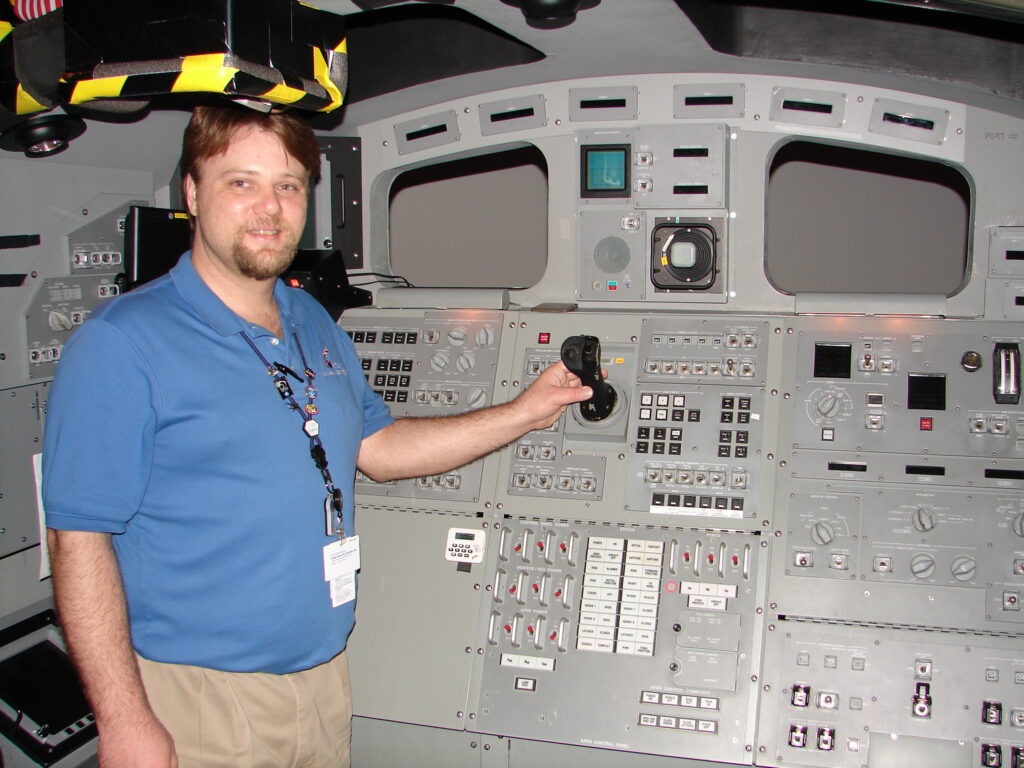
Orion Crew Exploration Vehicle – Controls and Displays
While working with Lockheed Martin at NASA’s Usability Testing and Analysis Facility, I led human-centered research and design efforts for the Orion Crew Exploration Vehicle—the next-generation spacecraft. Our team focused on the development of both the hardware and interface for the vehicle’s cockpit, including the layout and styling of physical controls, the design of the UI displays, and the evaluation of the spacecraft’s cursor control device.
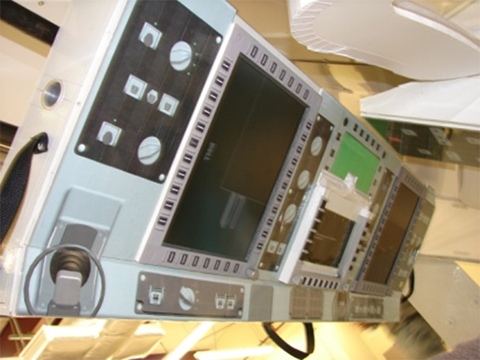
The image on the left shows an early cockpit mockup with a proposed three-display configuration: one for the pilot, one for the co-pilot, and a shared center display. We conducted extensive usability research to evaluate key ergonomic and interaction elements, such as reach distances, button sizing and placement, and bezel design.
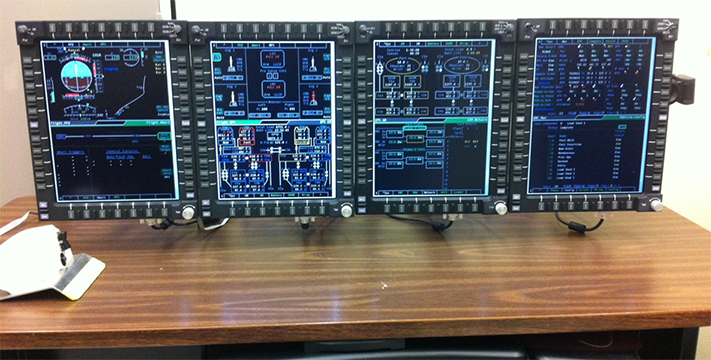
On the right is a photo from our lab featuring four functional displays built with finalized bezels and button assemblies. These prototypes were fabricated using in-house 3D printing combined with commercial-off-the-shelf switches and knobs, all integrated by our engineering team. We collected both qualitative and quantitative data throughout testing, which directly informed the development of design standards and formal requirements for the Orion spacecraft.
UX Skills Demonstrated:
- Human Factors Engineering – Applied ergonomic principles to cockpit layout and reach/access testing.
- UI/UX Design – Designed and refined on-screen display interfaces and control layouts.
- Usability Testing – Conducted studies using both mockups and functional prototypes.
- Prototyping – Collaborated on the creation of physical prototypes using 3D printing and COTS components.
- Mixed Methods Research – Collected and analyzed qualitative and quantitative data to guide design decisions.
- Task Analysis – Broke down astronaut workflows to ensure interface efficiency and safety.
- Iterative Design – Incorporated user feedback to refine both physical and digital interface components.
- Cross-functional Collaboration – Worked closely with engineers, designers, and end users (including astronauts) throughout the design cycle.
- Requirements Definition – Helped translate research findings into formal design requirements and standards for spaceflight hardware.
Altair Program – Lunar Rover Habitation and Controls
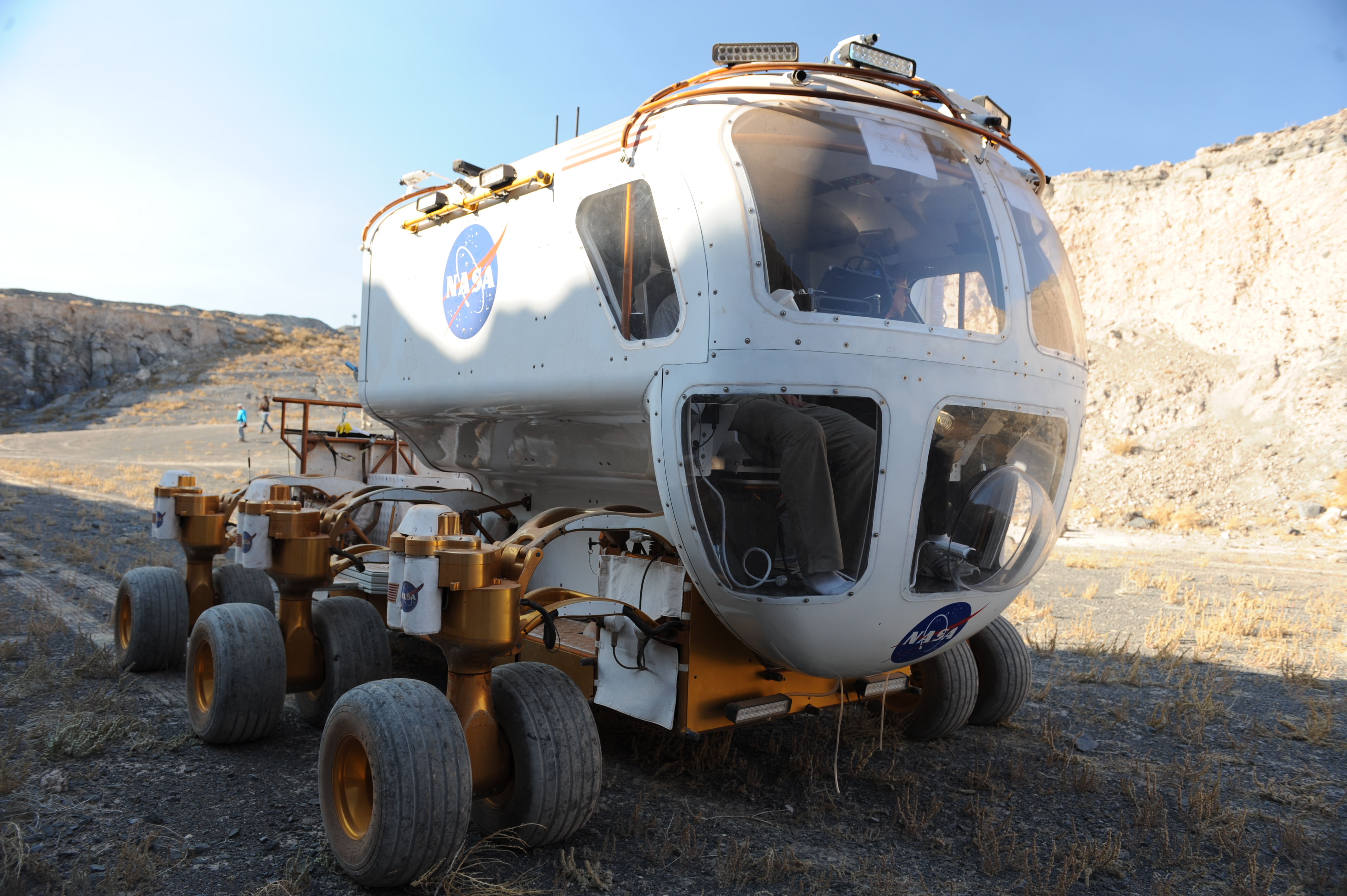
As part of the Constellation Program’s efforts to return to the Moon and establish a permanent presence, I contributed to several human-centered design studies for next-generation lunar systems—including landers, rovers, and surface habitats. One notable project focused on evaluating window design for the pressurized Lunar Rover, which would serve as both a vehicle and temporary living quarters for astronauts exploring the lunar surface for up to a week.
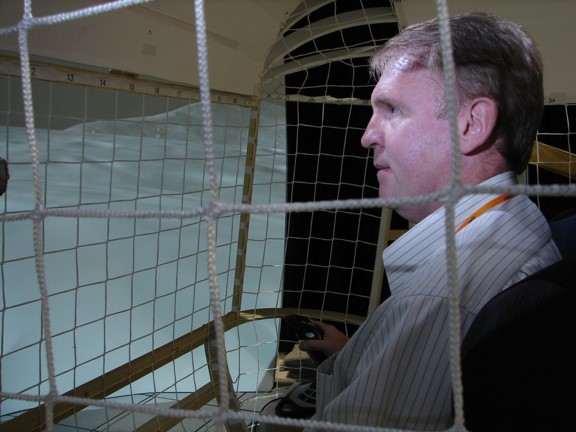
The study was conducted in an immersive simulation dome, where up to seven projectors displayed a computer-generated lunar landscape based on real scans of the Moon’s surface. This setup created an accurate, high-fidelity environment to simulate real driving conditions across various terrains such as flat plains, rocky fields, and cratered regions.
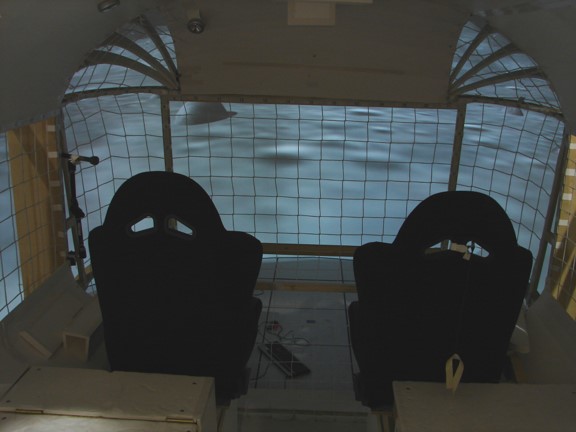
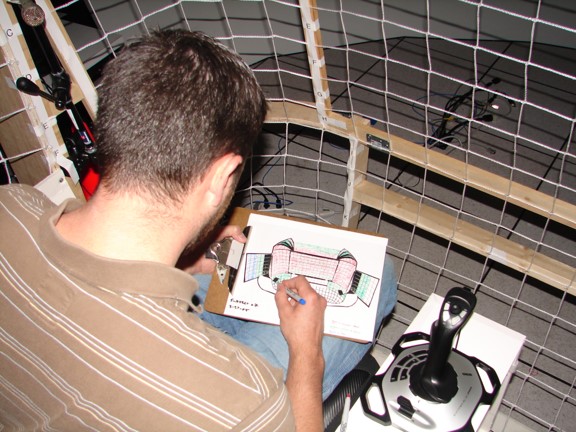
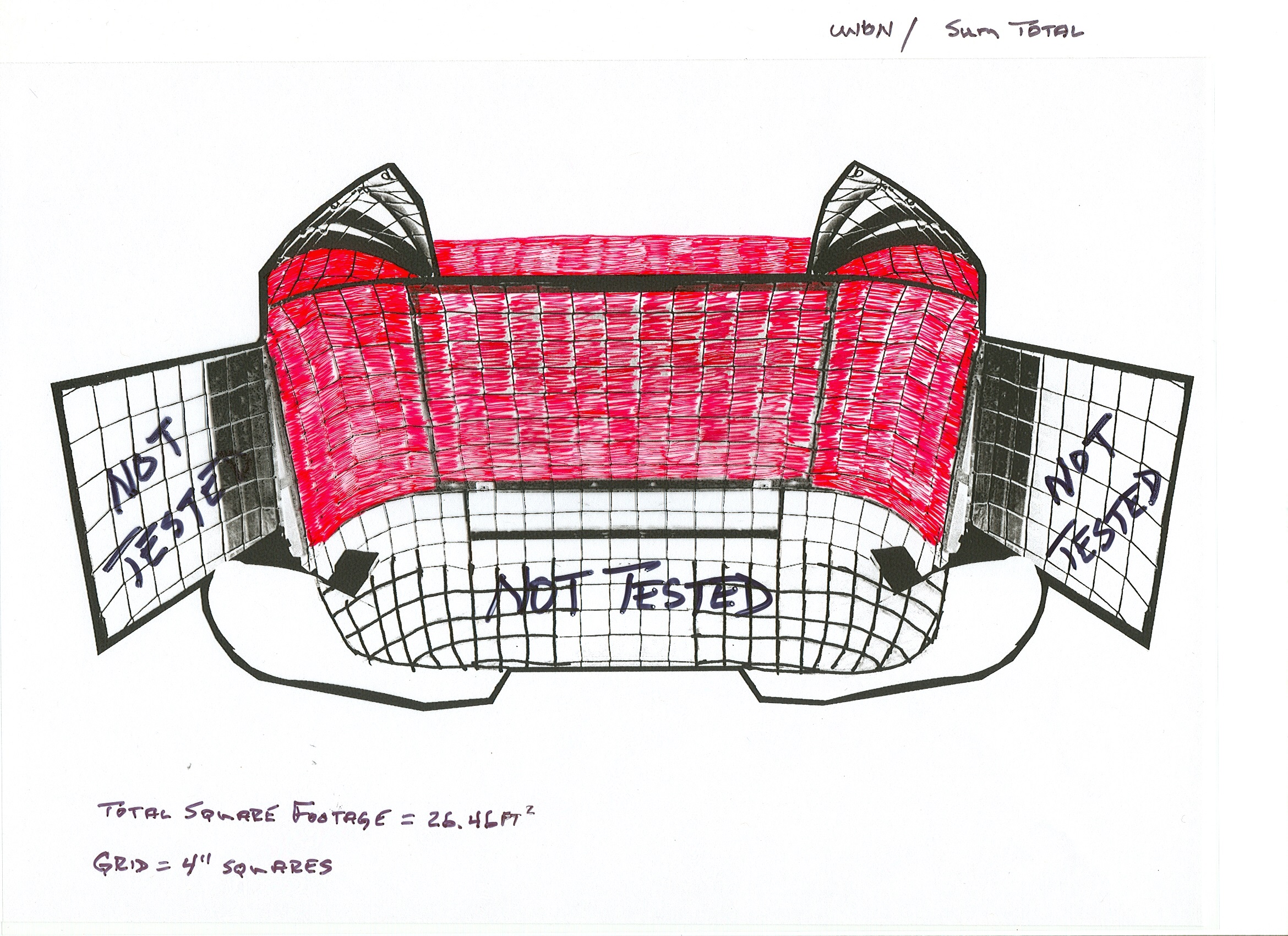
Our goal was to determine the optimal size and configuration of the rover’s front-facing windows to ensure sufficient visibility for driving and sample collection. To test this, we built a partial mockup of the rover’s front section and covered the viewing area with a gridded mesh. Participants then completed simulated driving tasks and marked the areas they visually relied on using color-coded representations on printed grids. These aggregated data visualizations were used to generate design recommendations for rover engineers.
UX Skills Demonstrated:
Simulation-Based Testing – Designed and conducted evaluations in an immersive, realistic environment.
Human Factors & Ergonomics – Evaluated astronaut field-of-view needs in context of safety and task performance.
Task-Centered Design – Focused on critical astronaut tasks such as navigation and sample collection.
Prototyping – Developed a physical mockup to support testing of window placement and configuration.
Contextual Inquiry – Observed user interactions in a simulated lunar driving environment.
Participatory Design – Engaged participants directly in marking visibility needs and contributing to design feedback.
Quantitative Data Synthesis – Translated participant input into spatial data maps to identify high-importance visual zones.
Stakeholder Collaboration – Provided actionable insights to engineering teams for integration into rover design.
Systems Thinking – Considered the interaction between human needs, spacecraft architecture, and lunar surface conditions.
NASA IT Labs was formed to examine innovative technologies for future space flight operations. A seed fund of $10k was given to select projects. My project focused on the use of the Microsoft Kinect to interact with computer applications using gestures and voice recognition.
One of my final projects while at NASA involved a study as part of the One-Year Mission aboard the International Space Station, which studied the health effects of long-term spaceflight. Our study examined adaptation changes in terms of motor control during and after spaceflight.